

 This isn't a blog. So, the following posts aren't in reverse chronological order. They're not a complete list of posts on this site, and they also include stuff I wrote elsewhere. To the extent they have an order, it's based on what I wanted to showcase the last time I updated the list. If you're looking for something in particular, I suggest the search tool in the header. Also, I've been trying to write more over on the LIT Blog. So, you might want to check there too. If you don't know any of my work, I suggest starting with Algos, Bias, Due Process, & You. It's a pretty good encapsulation of my teaching.
Algos, Bias, Due Process, & You
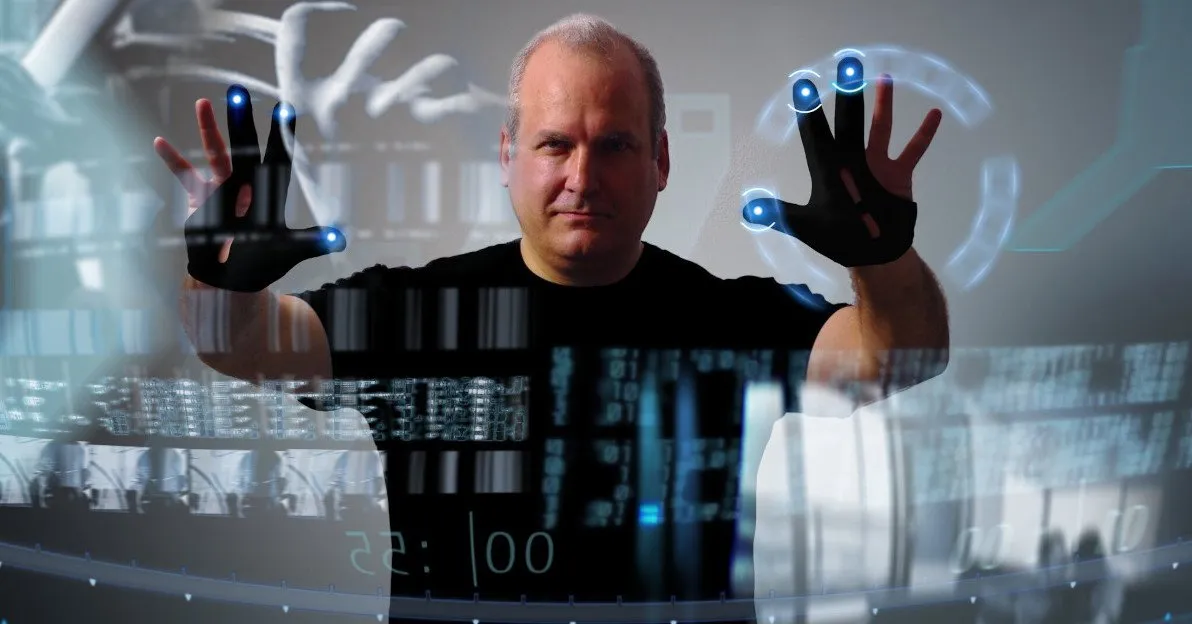
I was given free reign to expound on the topic of algorithmic bias as a guest lecturer in one of our legal tech classes, and I had such a ball designing and delivering this one-off lesson, I just had to share. What follows is the “DVD commentary/Making of.”
TL;DR: I built a bunch of highly-modular online simulations you can use with your students. They cover automation bias, the false positive paradox, competing definitions of fairness, disparate impact resulting from machine bias, and the value of due process. Most of them are self-explanatory and can be used on their own. However, the first one intentionally lacks in-simulation context, and I think linking them together creates a more-compelling narrative arc. Play with the links provided in isolation, or join me for the guided tour.
How and Why I (Still) Use Social Media Bluesky isn’t dead; used correctly, it’s pretty great actually!
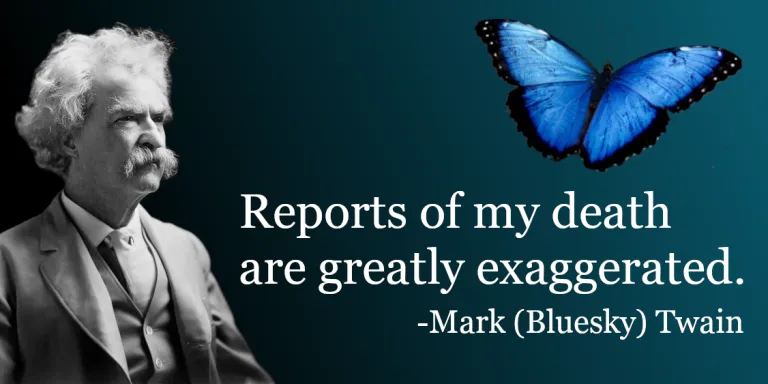
When I wrote this, I had no idea it would become such an evergreen post as it seems that every few months folks talk about how Bluesky is dead, dying, or a small niche community. Incidently, Mastodon is still chugging along as well, and I regularly get more engagement there than I do on Bluesky. Anywho...
I left Twitter in the winter of 2022 after about 15 years as a power user. During the intervening years I’ve learned a lot about myself and social media. I’ve tried a number of potential online homes, and even attempted to build replacements for what I was missing, like an open-source tool aimed at satisfying my need for a newsfeed. This is the story of how I’ve come to find social media I enjoy, a showcase of some content I think you might like, and an invitation (along with some instruction) for you to take control of your media consumption by building your own tools.
TL;DR: Be intentional. Find your community, and control your algorithm(s).
If you want to jump to the part where I suggest things to try (e.g., join this site, follow this account, etc.) jump to Suggestions, and if you’re worried by Bluesky in the title and that it might not deliver what you want, I built some tools to showcase what you can find there. Check out the catalog of daily digests at icymilaw.org or @icymilaw.org‘s timeline on Bluesky. If you see stuff you like, come back here, and we’ll get you set up. Also, much of this piece is relevant even if you never visit Bluesky.
50 Days of LIT Prompts Learn prompt engineering through doing with new prompt patterns every weekday for 10 weeks

As an experiential educator, I firmly believe experience is an excellent teacher. So, let's build some stuff. In the process we might just gain some perspective on this whole generative AI craze.
I teach law students about technology, and recently I created the LIT Prompts browser extension to help them explore the use of Large Language Models (LLMs) and prompt engineering. You can download the extension for Firefox or for Chrome.
Every weekday for the next 10 weeks, I'll update this page with new prompt patterns and invite folks to play with them inside LIT Prompts. We'll be plugging into the technology that runs tools like ChatGPT, giving you a level of control that most people don't see. You won't have to do any "coding," but we will think like coders. I'm still suspicious of the term prompt engineering, esp. when used as a job title. The idea that an entire job could be built around "talking" to an AI seems a bit too loosey goosey. So, we'll try to introduce some rigor. We'll aim to think about workflows and systems where writing prompts is just part of a larger endeavor. You'll be supported by the fact that LIT Prompts lets you produce reusable interconnecting prompt templates. This will let us build upon what we learn and improve our practice over time. We'll explore the promise and perils of this new technology while you build custom interactions/workflows. Plus, I'm pretty sure we'll have fun along the way.
Life (Short Story)

Winner of the Lawyerist 2016 Short Fiction Contest. Written well before the Supreme Court's overruling of Roe v Wade, we visit the United States as it celebrates its tricentennial. Human life extension has been perfected. Roe is but a distant memory, and a case before the Supreme Court is poised to ask, what is the meaning of life.
"She remembered the elation among her cohorts at conquering aging. She also remembered how short-lived the high was and how quickly a nation came to understand the concept of inelastic demand. There was no limit to what people would pay. After all, the benefits were transgenerational, since [they were] passed from mother to child. It laid bare the gulf between the haves and the have-nots. For the first time in human history, the rich really were a different breed."
Read the story (3,700 words)
Driverless Cars Poised to Undermine War on Drugs (Flash Fiction)

It's 2041 and driverless cars have eliminated traffic tickets. How will policing survive? In this tale of unintended consequences, I use our relationship with the car to interrogate modern policing along with the interplay of digital surveillance and overcriminalization.
"Danielle remembered a time when her parents drove, but they shared the roads with autonomous taxis and long-haul trucks. By the time she was old enough to get her driver’s license, owning a manual car didn’t make financial sense. She didn’t need one to get around, and insurance for human drivers was astronomical. There was no question. The world had become a better place. Pre-automation, tens of thousands died every year in what people euphemistically called accidents. Distracted, tired or otherwise impaired people; that’s what caused those accidents. Today, annual traffic fatalities numbered in the hundreds."
Read the story (1,100 words)